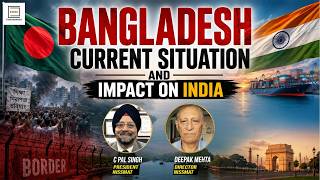
The problem in West Asia has been festering since long. USA and Israel started attacks on Iran. Heavy bombing by USA, Missile attacks by Israel and counterattacks by Iran on US basis in Gulf countries have brought the world close to World War III.
What this session covered
This session was a moderated discussion between two senior veterans — one from the police service and one from the Army — with the host, himself a retired Army officer, also contributing substantively. It examined the conflict in West Asia involving the United States, Israel and Iran and its wider global repercussions. The opening framing placed the war alongside the Russia–Ukraine conflict as one of two active centres of geopolitical gravity, with East Asia treated as a latent third. One speaker drew on classical strategic thought — from Clausewitz, Sun Tzu and Kautilya to Mackinder, Spykman and Mahan — to argue that geo-economics and technological dominance now matter more than territorial control, and that Iran, after decades of sanctions, had shown considerable resilience in its missile, drone and air-defence capabilities.
The discussion then weighed considerations for and against each of the three principal parties: for the United States, questions of credibility, financial burden and the risk of being drawn into a prolonged conflict; for Israel, internal cohesion set against mounting international criticism and strain on its forces; for Iran, expanded regional influence set against economic pressure and the loss of senior leaders. One speaker suggested that a prolonged conflict would weaken all three. The muted reaction of the Gulf states to attacks on bases in their territory was attributed to economic dependence, reliance on desalinated water and demographic fragility. A detailed terrain appreciation of Iran and the Strait of Hormuz followed, covering mountain ranges, deserts and island territories, with the view expressed that ground operations against Iran would be difficult.
The closing section turned to implications for India: pressure on oil, LPG and aviation fuel; longer air routes and effects on tourism and remittances; the position of strategic petroleum reserves; damage to connectivity plans through Iran; and the Navy's role in escorting merchant shipping. Speakers also raised possible internal law-and-order consequences if the conflict continues, including labour movement linked to fuel scarcity. The session ended with a case for placing India's relationship with Iran on a steadier footing and the hope that the strait would reopen and trade return to normal.
Key points raised
- The discussion framed the West Asia conflict, alongside the Russia–Ukraine war, as one of two active centres of geopolitical gravity, arguing that geo-economics and technology now outweigh territorial control.
- Speakers assessed points for and against the United States, Israel and Iran in turn, with the view expressed that a prolonged conflict would weaken all three parties.
- The Gulf states' muted response to strikes on their territory was attributed to economic dependence, reliance on desalination and demographic fragility.
- A terrain appreciation of Iran and the Strait of Hormuz led to the assessment that ground operations against Iran would be difficult.
- For India, the discussion flagged pressure on oil, LPG and aviation fuel, effects on remittances and connectivity through Iran, and possible law-and-order consequences, and argued for a steadier India–Iran policy.
Session transcript
This transcript is auto-generated from the session recording and lightly edited for punctuation and readability; it may contain transcription errors. The video remains the authoritative record.
Read the full transcript
Good morning, good afternoon, and good evening to all the viewers on this summit. I'll be speaking on the platform of NISSMAT. NISSMAT stands for National Institute of Safety, Security Management, and Applied Technology. It's got a very diverse field. NISSMAT do deal with security, safety as the name suggests, and we also can conduct talks on contemporary subjects like what we're doing today.
Today's subject is West Asia and the implications of this war in West Asia. This war has affected large number of nations geopolitically in the fields of security and economy. There is a entry feeling that the US got pulled into this West Asia war at the behest of Israel because it was felt that Israel very soon is going to be having their nuclear weapons. The actions of both sides be US and Israel together and Iran on the other side is causing a lot of economic problems to the world because the Hormuz Channel, which is the main channel from which the oil and gas goes to 80% of the world is blocked by Iran.
Now, we have two distinguished speakers on the subject. We have Mr. C. Pal Singh. Mr. C. Pal Singh is also the president of NISSMAT. He is a very senior veteran. He joined the police service in 1962. He had done initial training at the Central Police Training College at Mount Abu and the prestigious Police Academy at Hyderabad.
He has had the privilege or he was nominated by the government to raise an elite force that is a Rapid Action Force. And he was the commander of the Rapid Action Force. For his distinguished service, he's been awarded large number of awards. Post retirement, he was given the prestigious award of Security Personality of the Year by the President of India in the Global Security Conference. He is a member of the casting and the most important of that is he's a chairman of the Children of the World. It's a government of India organization and he's the president chairman of the National Capital Region of Delhi.
As far as Major General S. V. P. Singh is concerned, he is the second generation officer of the Indian Army. He's an alumni of the prestigious Rashtriya Indian Military College at Dehradun and he's also done his training at the National Defense Academy, the Indian Military Academy. He's got a very vast experience in the field of operations, administration, and logistics. He commanded his regiment in Punjab during the insurgency. He is a brigade commander of an artillery brigade in a very major military station. And he headed the artillery operations in a theater and at the army headquarters.
As far as I'm concerned, I am also a third generation army officer. I was commissioned to the Rajputana Rifles. I've had a vast experience in both counterinsurgency operations along the line of control and also along the LAC, that is along the northern borders. And as far as I am concerned, we will start the discussion with General S. V. P. Singh. Sir, may I request you to give us the geopolitical situation as emanating out of the war in West Asia, sir.
Thank you very much General Deepak Mehta. I mean, you're always very, you know, praiseworthy well beyond than what one is. But I'm very grateful to you for this introduction and with Mr. C. Pal Singh in presence, I deem it a great honor to be today part of the NISSMAT and this podcast come webinar. Now, let us address the issue where the world is really sitting on a tinderbox. Yes. It's a tinderbox situation. It's a volcano which has erupted not in the Japan side, which we know volcanoes are there. It is in West Asia.
And the three strategic masters, I would like to quote them, how much the applicability of all that is there today as per them. So, first I would say Clausewitz. He said that war is a continuation of politics by other means. And this other means today is a calibrated system of war to inflict violence. We do not know at the end stage whether there will be any achievement. Now, that is very important because all wars are fought with some objective and aim to achieve.
Second is Sun Tzu, you know. Now, he said all warfare is based on deception. And we got a temper topics taking place in the world where whether you speak or you do not speak, it is all deception. And other opposite of that being dishonesty. Yes, when you're doing diplomacy, then there should be no dishonesty. But when you're on the battlefield, well, deception is a principle of war which we must practice. Absolutely.
And thirdly, closest to our heart is Kautilya Chanakya, who said that when the enemy is weak, attack. When the enemy is equal, you wage a war. And when the enemy is becoming stronger or strong, then you seek peace. So, today, let's analyze who wages the war and who's seeking peace.
So, again, we come to now the geopolitical situation or a little survey of it. How the Americans have got carried away in the lust of power. And the lust of power I say today is resting on a group of about six to seven administration officials who were the secretaries in the Trump administration 2.20 headed by the POTUS himself and the Secretary of State, his Defense Secretary, who the three combined have, you know, they're playing a round of musical chairs and they do not know in which chair they last sat on. So, the statements and the dialogues all are changing stance, which has led to American diffidence, which has led to America losing its purpose what they were to do.
Now, let us see geopolitically where we are placed. You see, the world today is facing two centers of gravity. Last four years, we have seen the Ukraine-Russia war, which has been totally violent. It's been a war where we have been speaking as military men and as strategists that we are in a fifth and sixth generation of warfare. But what has happened in Ukraine war, we have seen the First World War trench warfare also taking place. Right. Where is that fifth sixth generation of war? And what have really learned one crux lesson if I have to say, that all this fifth sixth generation of war goes for a six when the artillery fire starts pounding you. Everything is forgotten and, you know, you just then do your battle drills as best as you can.
Now, coming to the other center of gravity, this is our West Asia, Middle East. Now, this has again been always a melting pot of these things having been counted among the geopolitical fault lines in the world. And this area has always been at war with each other, isn't it? The irony is that all of them, this region belongs to three greatest prophets, the Abrahamic religions, Abraham himself, Moses I would say also followed him, and then is the Christianity, Jesus Christ, and then the Muslim, which is Prophet Muhammad. And look at it. The three great spiritual teachers, none of them as Abrahamic religion could absorb his teachings. And what they're doing to themselves? So, it's a very big lesson if we honor the spiritual aspect of life which we as Indians are deeply associated. It's deeply rooted in us.
Now, the other center of gravity which has always been in being a threatened being is the Southeast Asia, East Asia area and Taiwan being the prominent one. Now, that is at the moment on hold, but friend China is eyeing every activity and they have been breathing down the throats and neck of the Taiwanese ever since the last administration Bush and if I could call to you, the speaker of the house Pelosi when she went, what blockade they did and Pelosi could only reach there when she was escorted by a group of fighter jets which then had electronically switched off the or jammed the Chinese systems. Now, so that shows how the world has shaped itself.
Now, geopolitically in the past mattered through geographical boundaries. It mattered that how I can dominate territories, land. So, I always like to quote Mackinder who said that the Eurasian landmass is the one that holds the power to the world. So, that's the landmass. But we've also got Spykman saying that the coastal areas are the ones which give you the power. If you have the coastline power, then you can go into the hinterland of the nation provided you have the military power to do so. So, both of them have their theories and both are in practice today in West Asia. They're also been in practice in Ukraine-Russia war because of the Black Sea.
Now, with that, but today where does the geopolitical thing really stand? I would say it is geo-economic which has overridden the geopolitical aspect because boundaries, territories matter less. It is the technology. Who dominates technology dominates the world today. And the geographical boundaries have retreated to little behind. And when I say that, it includes your technology, it includes your artificial intelligence and includes your disruptive technologies which are the ones which are taking to the forefront.
Now, other is that natural resources of the countries of the land, they always reign supreme in the power of the nation. So, what America does because it's a very rich land, they have got all the riches. So, they dominate the natural resources that given them that ability to dominate and what they did, they build up their military power, they build up their scientific power and also the space power.
Now, what about Iran who's the main opposition here? Four decades of sanctions and here is a country, a civilized country, 5,000 years of history. With all these sanctions, they did not lose their civilization in richness and they worked on their science and technology, they worked on their engineering aspects and they have held on as we have seen today what has emerged in this war. Yeah, how strong Iran is.
And in this geopolitical environment, I would say that when we count on the multipolar powers facing through from the unipolar which America considered itself to the multipolar which we include China, Russia, we include our great India. And don't rule out North Korea also coming into play, sir. Yes, you see, and next is can now Iran be ignored? Whatever damage may have come to it, it has proved that it has the resilience, it has the geography to take it forward. And that is what is scaring. That is what is scaring and that is where our Kautilyan adage which I said that quote is so applicable more to United States. They're seeking peace and Iran feels with all their losses, all the destruction which has taken place, they still can hold the handle to it.
So, geopolitically you see again if I have to quote Alfred Mahan who says who controls the seas controls the world. Yes, it is so. But look, it is technology, the frontline technology today. The three aircraft carriers present in the Arabian Sea near the Persian Gulf, they dared not enter. Your naval power, where it is gone? Because the geopolitical aspect is governed by geo-economics and geo-military power coming through this science and technology. So, I think it's in a different way I would try to put rather than you know, the politics part of it that today there is a mass difference.
I have not mentioned Israel. Israel is working with a unique aim and that is to create greater Israel. Exactly. Exactly. And to that granted to the Jewish brains, the Jewish mind, the American Jews hold the American administration to be a hostage and their Netanyahu has worked through like salami slicing which we talk about Chinese. He's worked through salami slicing all these almost two plus decades of prime ministership. So, Gaza gone, West Bank going, Litani River in Lebanon in Israeli occupation more or less despite all the major losses. So, greater Israel, Arab world be careful. It also includes portions of Jordan. It touches upon Egypt.
So, the Arab world has to be very careful that they have sided with the Americans, but for how long? Arab world, the Gulf countries, they put all their money in one basket of security shield from America. So, the military bases which came into being post Kuwait war 1991 because the Kuwait war had preceded the Iran-Iraq war, eight years war 1980-88. And that war taught lot of things in geopolitical power play. America, Russia, China, they actually were siding with Iraq. China little less. But as the war went on, America started supplying arms to Iran also. So, the double game, the great power game which is played was there.
So, the fear came into these monarchies that who will protect us? If eight years war Iraq couldn't achieve with such support, what will happen to us? And that's how the military bases came into being. And today the world is seeing once again the American angle, they can drop anyone by turn of bricks. They have not been able to provide any shield, they have not been able to protect these monarchies and today these Gulf countries are actually at a loss to understand where they should stand in the Middle East West Asia in geopolitics.
Sir, may I add a few points to the geopolitical aspects? Firstly, but as you brought out, there could be a linkage in times to come between Iran, Russia, China and North Korea. As a matter of fact, Russia is showing a lot of interest in this area. As you mentioned that the protection which the Americans have provided, all the Arab countries were looking into the protection of America of the US. Now, it's being frayed. Now, Russia is showing a lot of interest in this area and they say we want to be the mediators.
Now, you see US and Israel on side. In a frayed environment, this US is not with NATO or the NATO is not with the US anymore. Geopolitically, it has a very major implications. Another point which came into my mind for the geopolitics is that this area is going to be further on fire. You see in Yemen, the Houthis are being supported by Iran. Hezbollah in Lebanon, Hamas in Levant. And in Iraq, the Islamic groups have also attacked the American bases in Iraq. So, this war I feel has geopolitically, it is further expanded further to the west. So that is going to be a very major problem if not solved it'll going to carry on for some time.
And as you mentioned Israel is showing interest in greater Israel. That is all the area up to the Litani River and Lebanon. So it's going to be a very confused state general afraid world order in times to come.
General Mehta, General Singh has elaborated at length very analytically and beautifully very cogently the geopolitical reasons and geopolitical background of the case. You have also emphasized on the geopolitical. Yes. I like to take on from here onward that in the present war what it says today what could be the points in favor of or in against America? What could the points in favor of or against Iran? What could be the points in favor of or against Israel? Yeah.
As far as America is concerned well, America's point which normally they must be thinking that there are points in favor of them is that they want to reinforce US as a role as a global power leader. First of all is this. This is in mind as a global power leader US role first. Second they have a point that we must deter adversaries like Iran and its proxies or the Hamas etc. which are going to create some problems for US and the population which are anti or which are not very favorably inclined to the Muslims. Third it also secures its automatic route it wants to secure maritime routes like it was of the idea that the Strait of Hormuz should be controlled somehow or not by America or maybe it can be I'm not sure but these are the points which the thought is in their favor. Now to deter further the more important point the last important point in favor or why they started they wanted to deter adversaries like Iran. And wanted to go in favor of their own so-called friend. Because they thought that they must reinforce US role not as a global power but as a friend of the people who are inclined to be pro-US.
Now what the points against this war which will go against this war as far as US is concerned that the risk of being drawn into a prolonged conflict. Trump said that he'll just do it in a few days and finish it. But they have taken a risk of being drawn into a very prolonged conflict. Then high financial burden on the US economy. That is another point which goes against this war against US. Then there is a potential loss of American lives also. Have been losing and there are potential likely loss of lives of Americans also. Then it also complicates relations with Iran indirectly as the nuclear negotiations were going on. So far nuclear containment and powers were concerned that already negotiations were going great they jumped into it. In fact in this case they have complicated that point also.
Then the humanitarian crisis in the war has damaged the US global image. Because it is favoring a country like Israel who have taken to large scale killing children irrespective of, I'm not saying in favor of Hamas or against Hamas. The way the merciless killing has been going on by the Israeli against Hamas or in Gaza is known to all of us. So the humanitarian crisis has damaged the US image globally also that they are siding with a power which is non-humanitarian which is cruel. The rise of oil prices I'm telling you shall shake at one time the US economy.
Then what could be the points in favor of this war by the Israel? Now Israel has strengthened internal unity. There were some conflicts internally in the leadership. So by going into this war the Israel has strengthened the internal unity in this crisis internally. Then it reasserts its control over disputed security and sensitive area. There are certain security and sensitive areas it has reinforced that it's our claim. It's not the Hamas not this thing that thing that's our claim they're trying to reinforce. It also weakens in effect Iran backed network that is proxies etc. in this region. And it improves the military preparedness and testing of its military preparedness and also its well-known agency detective agency Mossad. So these are the points which go in favor of Israel.
The points which go against Israel is that heavy civilian casualties which it is inflicting is leading to global criticism of Israel. Then the risk of multi-front war not only near Gaza but maybe Gaza or maybe Lebanon maybe other places. So they is taking the risk of a multi-front sort of war. Israel taking this risk this point goes against them. Long-term insecurity will be there because despite short-term gain long-term it will suffer from a sense of insecurity. Then strain on its military and its reserve forces. It is straining in this prolonged war Israel straining its reserve forces. The risk of escalation into full-fledged regional war. That risk also they have taken so the points against Israel.
Now the points in favor of war for Iran would be one it expands its regional influence. Although their proxy groups Hezbollah Hamas or they but it sort of expands despite its killing of leader it has expanded its global influence in this region. Then it has positioned itself as a leader of the anti-Israel and anti-US block. Now Iran can say that this is the leader of the anti-US block as well as the anti-Israel block. Then it also gains support among sections of Muslim world. Iran has been able to get support of sections of Muslim world at large. Now counters USA presence in this region. It is indirectly it has countered because although it's bombarding the areas which are inhabited but it counters the presence of US. It is telling the presence of US yes. So this is in favor of Iran. Then it creates pressure on Israel's security system also which they were saying were very impenetrable this thing there but it's creating pressure on the Israel's security system.
But there are points which go against Iran also. The severe economic strain it has suffered and is going to suffer due to sanctions and instability. And lot of important leaders number of few important leaders have been killed. Possibilities of internal unrest cannot be ruled out totally. There could be at this stage they are united but possibility of some internal unrest being created in Iran cannot be ruled out. Then another thing is that already weak economy to some extent although not Iran itself but the countries around they are being weakened further. Then there is also risk of cyber and covert attacks. It has invited. It is against Iran this point. It's happened sir. Long-term instability in neighboring regions. This is also.
So I have of the view that from A to B some points are in favor some are against the USA. Some points in favor some are against the war in Israel. Some are in favor some are against but in general as far as the global opinion is concerned, I think the economic suffering which are likely to be there for global at large, as well as the attitude the big brother attitude of USA has affected the minds of the people who have been earlier thinking that USA can be our friend and all. So, my analysis is that by and large, it has affected both the sides. And if it's prolonged, it would really be a serious global crisis. That's my point of view.
Sir, I'll add a few more, then I'll request General S.P. Singh also to give his views. It is a very expensive war for US. There are reports that anything between 1.5 to 2.5 billion per day is being expended by the US. You already brought out, sir, that it's hurting the economy in US also. That the cost of fuel from $3 to $4 per gallon and the inflation is also going up. Now, Trump has asked for 1.5 trillion dollars in the next budget. Why? It gives a indication that there have been major losses of the Americans both in equipment and that's radars and aircrafts. They have been using high-end equipment of, you know, like for the Iron Dome and the THAAD against low-cost UAVs and missiles. Now, the 400 Tomahawk missiles which were supposed to be given to Japan by 2026 have been set aside. It indicates that American also are short of weapons and equipment. Am I right, sir? S.V.P., sir?
Absolutely. You see, they've also moved THAAD batteries from South Korea and moved it into Israel. Now, that shows the level of planning which they did for this war. And though we are all fascinated with the intelligence achievements of Mossad and the CIA, yet in this war, their intelligence has come out lacking. They did not assess the resilience, the staying power, the re-consolidation post June 25 of what Iran would have done. So, Iran went for its missile capability, which they are best, their drone capability, and also, contrary to large belief, their air defense system is pretty good. They've got different layers, but they were overwhelmed by the surprise which was done on 28th February.
So, to that extent, yes, Americans lack that, and most importantly, in this intelligence assessment is, as I always say, the cognitive aspect. The brains did not apply themselves correctly in this network-centric warfare because network-centric warfare isolates a person and higher commanders into isolation. So, I think that networking of the cognitive ability has suffered in this. And Israel should have been well informed because 7th October '23, they'd already been surprised. So, they should have done better. And now they're paying the price for it. They're paying the price for it, yes.
Because of arrogance of prestige. Yeah. Prestige becomes false. It's a false prestige being displayed by Trump and Netanyahu. Why Netanyahu? Because the moment there is no war, he is going to face the judicial aspect of his doings in Israel. Yeah. And he'll be hounded. And for the president that is POTUS, he is louder than life, bigger than life, thinking that everything is going to turn and he can turn back a country to stone age. But, it's not going to happen. Those are words. These are words you can trumpet, but no sounds will be heard anywhere else. So, that's the important thing.
We touched upon NATO. Yes, NATO is frayed. But, you know, if you look at the constitution of NATO, to withdraw from NATO, it goes through a procedure. And in the US case, it is also approved by the Congress. So, those steps have to be taken. But, what Trump can do during his tenure is reduce the deployment in the NATO countries there to make NATO vulnerable. But, I think Trump again has lost thought of his main aim. If Russia threatens Europe, whether they're ready to accept Russia overpowering and getting into Eastern Europe in a bigger way, which the European countries fear. So, this is all the geopolitical play which is there, and some of the things are loud talk.
And I'd like to intervene here. Not exactly intervene, I mean, in a way interject. And I'll try to emphasize the point. These are the perception of General mine, other generals saying, General Mehta or mine, on the basis of our background and also on the basis of our own assessment. What is the global perception? Relative, global perception today is that as far as I feel, the Israel faces strong criticism globally. First point. Israel faces strong criticism. Now, as for USA, it faces mixed reactions. USA is facing mixed reaction. As far as Iran is concerned, people still think Iran gained support in some way from certain blocks which have earlier remained isolated. So, my assessment perception is the global perception seems to be, not mine, global perception seems to be strong criticism of Israel, mixed reaction and criticism of USA, and Iran gaining support in some blocks which were earlier feeling isolated.
Then, what could be the consequences? The long-term outcome, of course, is a prolonged conflict will weaken all of the three. Maybe it's Israel. Israel may weaken in terms of its own security, may get down. USA credibility costs will come down. Iran itself economy and isolation will be there to some extent. But, a full-scale regional war involving Iran, Israel, and USA would directly destabilize the countries which are close to West Asia at the immediate. This is what.
Sir, I was about to ask you the next question. There just a few points as far as Iran is concerned. Sir, they have also been hitting the US bases in the Gulf countries and all the Gulf countries. Against the perception that they have very limited resources, the US has given great protection, but that has been turned into a naught. Secondly, Iran has also been carrying out cyber attacks in US. So, they have attacked one US medical company. If Iran wants, the undersea cable which is passing through Hormuz or close to Hormuz, if they damage that undersea cable, the world in information technology will come to zero because 90% of the traffic is on this underwater cable.
One more aspect is that Americans wanted to change the regime in Iran. In spite of three levels of hierarchy of Iran having been killed, there is no change in regime. Regime is still the way it is. Though, of course, they are under tremendous pressure, but they're showing a lot of resilience. And as what the Iranian people are saying, how can a 250-year-old civilization deal with a 2,000-year-old civilization? So, that is as you said, you also mentioned that civilization aspect.
Now, since Israel and US are thinking of attacking infrastructures in Iran to get it back to the stone age, Iran has also activated that we will hit the US technology companies. The biggest in the Gulf. Being the Google, Microsoft, IBM, and I think they've already hit Oracle. So, Iran is also playing its game in a very resilient manner. This is my view on this, sir.
Okay. Could I take on? Yes, sir. Yes, sir. So, you see now we are really coming into what the conflict has been. So, after the initial 28th February strikes on the first couple of days itself, Iran on the first day had retaliated. Yes. It was not done in June. So, a message should have been actually registered by the coalition of America and Israel that what's happening. And this they had warned the Arab nations that do not let your bases be used because we will attack them. And they were warned. So, the first day itself, they shook up these Gulf Cooperation countries and including the Americans. So, that was one.
And then when their leadership had been decapitated, their missile systems, nuclear installations had been targeted. The air defense systems had been targeted and naturally when you target, there is an element of loss. Their girls' school, which is the biggest tragedy of the time in the human rights, it's a crime now which I think time will tell they'll have to pay for it. Yes. The culprits will be put to task. It will not die its death.
So, when they did this, Iran has retaliated not only then on the military bases, they extended it by targeting first the Saudi Arabian Ras Tanura oil refinery. They do not target the center of gravity of that for tactical strategic reasons, but they did do this. As the war went on going, they both sides went on inflicting damages, targeting the civil infrastructure also. America has gone down to education institutions, technical institutions, and the like. Why are they doing that? Because you see, you decimate the literature of a country, you're actually then making the country forget its civilization value because the books and others are going to get just obliterated. So, their aim is very deep and very cunning one. But Iran has reacted in equal measure. They've taken out to civil infrastructure in these Gulf Cooperation countries because the Americans started staying in their hotels. So, it's not against the Geneva Convention then really speaking what Iran has done. So, it is A for A.
Now, what is facing the world? What is facing the world is two three things. One is the oil which has been there for the last almost 80 to 100 years. The oil is gold, it still remains. The other gold is our life and that is water. Desalination plants have been targeted. You know, now that is a very serious thing. Very serious, yes. And particularly Kuwait and I think Qatar, they are 90% dependent on this. 70% dependent on this desalination plant is Saudi Arabia. Exactly. So, water and oil being combined, it's a very major this thing.
And apart from that, mass destruction which is taking place, I fear is this area heading for a scorched earth policy? Where you are denying a country everything because Iran is the target. You're denying everything to them. A country which is already going through such economic crisis for the last 40 years, this scorched earth policy is again a international crime. And this safeguards, the world has to step in somewhere. Now, we talked about NATO. You see, NATO countries have distanced themselves. France has joined Russia and China in the Security Council resolution of not opening the Hormuz Strait. Why are not nations rising that this war should come to an end?
A very good point that you have taken that we have acted in a little restrained manner. But I am telling you that besides India, Iran's reaction, I don't know, recent statement of President Trump has been very cautious. Extremely cautious, Iran's reaction. Yet very firm. Yet very firm because it reflects both a defiance as well as a strategic restraint. It's a defiance, of course, but there is a strategic restraint. Then Islamic leadership has also strongly criticized the US forces and US stars as provocative and biased in favor of Israel. They're biased in favor of Israel. And it reiterates that such rhetorics undermines the regional stability in this area. The rhetorics Trump is indulging in, such rhetorics can undermine the regional stability.
And I have a feeling that at one stage or the other, the global powers, other global powers like Russia and China, may seek a leverage of this. They will take advantage of this. They will take advantage of this, leverage of the situation and diplomatically calling for a restraint or otherwise also cuz their own influence they try to expand. That economic consequences of such as fluctuation in oil prices, disruption in shipping routes, etc. And also intensification of tensions are to be watched with care. So, therefore, I agree with you as far as India is concerned that there is a restraint at all. But otherwise, the danger is that if nothing happens, then in that case probably the global power like China and Russia may step in.
You know, actually it's all has been Trump's way of dealing with controlling the oil. The oil which was being sent earlier for Venezuela to China, actually the war was only that. No sooner Venezuela was taken over USA, they wanted that huge number of barrels were going to China, they stopped it. Then by taking control somehow of the Iran also, they want to do that. So, ultimately, the China gets affected because they need oil. So, therefore, the China may get its own way and try to have some sort of nexus with Russia and try to step in so as not to control directly but with a design that ultimately it is going to affect China's supplies, China's supply of petrol barrels, etc. And they may step in.
So, the restraint so far is good. But at the same time, I think by and large, so far, Iran has avoided escalation of the situation. I feel so far. And has not tried to go into direct confrontation. Instead, it's emphasizing its policy of resistance or attack on the bases of USA in and around Arab countries. What are your points on this subject, General Sahib?
Sir, I'll first address the point which General Sahib said in terms of the economic sanctions on Iran. For all so many years, and they are still pulling along. There are two reasons for it. Firstly, Iran is the largest producer of saffron. Saffron sells at the price of gold. Second aspect is Iran has four to 500 shadow vessels. These shadow vessels have been carrying oil to China. Iran earns on an average of 25 to 30 billion dollars annually. So, that is one point. So, economically, yes, they've been hit, but they found ways to get out of it.
Now, coming down to the second point which Sir Sahib I just mentioned, why haven't the other Arab countries reacted to Iran's attacks on the US bases in their domain? Sir, my reading is that firstly, economic reasons. Secondly, structural fragility. The GCC area is a true petro state. 80% of the stuff in the GCC countries are imported. 60% of the water, as already mentioned to you, is generated out of the saline water of the sea. Secondly, is the demographic changes demography of the various countries. For example, Bahrain has 50 to 60% shares. UAE is dependent on the expats. Once the attacks are going on and the industry of UAE is damaged, the expats are going to move. They're moving out as a matter of fact. So, it's going to affect UAE very adversely. As far as Saudi Arabia is concerned, the southwestern coast of Saudi Arabia, which is the oil producing, is also very high percentage of Shiites. So, there are demographic implications also for these countries not getting involved in war with Iran. Any point on that, sir?
General Saab, before we ask the expert, like SP Singh, he is our expert on the panel, I'd like to emphasize one more point, sir. That is as far as radiation is concerned, no increase so far in the radiation despite strike on nuclear plant, I'm referring to Bushehr nuclear plant. So far, there has been no question of increase in radiation. And as far as US is concerned, it jumped into this war without deliberating that what was its aim. Aim was only to help, isn't it? Or the aim was to disable Iran to have a uranium or nuclear capability. I mean, so far there has been nothing. No radiation has been given. Second, which was already actually being negotiated, this one. What was the idea to jump into that time? The USA jumping into the war on the behest of Israel, I feel was very ill-conceived. Because there were no question of nuclear negotiation that was going on and otherwise also, there has been no such radiation reported.
They have not read the Indian epic. US misguided the fighting capability of Iran also. Yeah. US miscalculated misjudged the fighting capability of Iran, I feel. And the oil diplomacy, which is that I'll have a control over Arman's state, etc., also seems to be failing. I don't think US will ever have that control which it's thinking of. It is exposed. Like long-term, you know, reaction in other countries also has not been void because long-term reaction can be there. There may be some not only Shiite, but even Sunni Shiite protests at some stages if it goes on and on, they may start acting and reacting. So, these are the points which have not been thought of by USA. They just jumped into it and on the plea that it's going to nuclear capability of Iran we don't disable, etc.
I think the expert, SPP, sir, I'll seek your, what do you call, your expertise in the terrain analysis and the Hormuz Channel per se, how does it affect the military aspect of it, sir?
Okay, thank you. Thank you, Deepak. Now, what Mr. SP Singh also brought out, you know, about the Bushehr nuclear plant being targeted and no radiation, but today somewhere on one of the channels that was there because there is some report of some leakage having taken place at Bushehr. How far it is true, we do not know because we are living in that AI world. But one point is there, both sides, Israel and Iran, they have been very sensitive. Like Iran has targeted Dimona, but they have not targeted the inner core of that. It is the periphery sending out loud and clear messages that we will target.
And if anything happens there, you see, the monarchies are the ones who are going to get affected more because Israel is very small. It will suffer the maximum. Whereas Bushehr, if it happens, the meteorological aspect, you know, which is there, this from Bushehr, it's likely to travel across the Hormuz towards these Gulf countries, Kuwait down to Oman. And so, the Israelis and Americans better be careful when they are going in for total near scorched earth policy of destruction. Bridges, now power plants are on target. Next will be energy and nuclear they're already trying to target, but they have not been able to reach what their main war aim is.
Now, coming on to the terrain part of it, we are really heading now, I think Deepak, you are taking us right into the war. And because I'm talking about terrain. First of all, we have to see our sand model here where the north is. So, the orientation now, you see, Iran, which I mentioned has been a civilized state, four times the size of Iraq, where America has had a taste of going there with boots on ground. And on Iran's east in Afghanistan. So, they have tasted honey there very well. And yet they have forgotten that 14 trillion dollars was what was lost to USA in Afghanistan. And they still ventured, but of course with little more sense, not going with boots in Ukraine.
Now, Iran actually in modern times has really not been invaded. During Second World War, there was that Germans had come there. I think they wanted some access to the railway part of it and all. But there was one war, 1980-88 between Iran-Iraq, which I had mentioned in passing. Yeah. Now, and they were Iraq, as I said, was supported by the Americans and all of them because Americans could not digest the 1979 revolution where their pet Shah of Iran was thrown out. And in fact, also the oil interest went for a six, you know.
Now, so let us look at Iran to what is its power. It is now in the north, if you see, it's got the Caspian Sea, which provides the very strong protection. On the north, northwest and north is the Zagros Mountains range which starts and it comes northeast right down to the coastline of the southern coastline of the Persian Gulf. Yeah. And when it is coming down and merging there, it is the swampland or the area which is there. So, this is the north northwest part and the southern southwest part of Iran's broadly the terrain analysis, which Americans, I'm sure, would have done in thinking of any boots on ground. And boots on ground consideration is not that it is taking place now. You see, Iran has been on their target the radar blip for 47 years. So, war gaming would have been done by them as they have done in the case of Taiwan. And the results of Taiwan are known from various think tanks that they will lose, America. The Iran part of it, I have not come across, but now let me look at the terrain on the north northeast and then come to south.
They got the Elburz mountain range which is there in north northeast, which is, you know, Caspian Sea there, the Armenia, then Turkmenistan further east and then Afghanistan. And as you come down to east there, here down is Sistan, the Baluchistan part of the Iranian Baluchistan part of it, which is there. Now, here there are two deserts. The two deserts, they are very fierce, very harsh deserts. They are Dasht-e Kavir and Dasht-e Lut. These are the two. And they are in the mid, I would say, eastern side and the south central side of Iran. Now, these two mountain ranges, they form a plateau between them. And that is the area which is, you know, habitable and that is where Iran is doing well for themselves.
So, now what happens? If I have done this broad terrain analysis, Hormuz Strait part of it also, Persian Gulf also I can cover, because part of Iran starting from Straits of Hormuz in the east. That 33 km chicken's neck. We are very fond of the chicken's neck in India. That part of it is the Bandar Abbas which comes when you move westward, Bandar Abbas port which is a very important port of Iran. And there island territories there, small islands, literals we can say, there is the Qeshm Island, there is the Larak Island. And as we come further westward little away from the Iranian coastline is the Abu Musa, the Greater Tunb and the Lesser Tunb Islands. Now, these three islands in 1971 or 73 was part of UAE. It is the Shah of Iran who occupied them. So, it's a disputed territory. Okay. This is important point. And then there is another island Negom. And last comes Kharg Island. Last is Kharg Island the westernmost which is near south southwest of Bushehr which is there.
Now, the waters of the sea in the Hormuz towards the Iranian side are deeper. The depth is greater. So, better for movement of tankers and ships. Now, as we know also that this Hormuz Strait is divided between Oman and Iran. So, Iran is not the sole owner of this Hormuz Strait area. And since they are saying that they are the custodians of it, Oman disputes it. United Nations also disputes it. So, the total rights are not there. Particularly when we apply the free navigation and these waters being commons in the world. So, that is the part of this terrain. Kharg Island has been more in picture. We can talk about it little later. Yeah, the westernmost we are going in. If you go in there, who's going to open the passageway from the east? You can stop the oil flow for Iran and they can suffer. But your own cause is not going to be served of opening the Hormuz Strait and the Persian Gulf which is about 800 to 900 km from east to west. Yes. This being the broad terrains.
And if you want, I can broadly tell you which are the options for an attacker. If Deepak allows me to, he is an infantry officer and he will retain the right. Ground operations are difficult, sir. Yes, I agree with you, sir. I just want to cover the, you know, options which are going to be there. If you look at North Caspian Sea and all, it's not Armenia. It doesn't serve any purpose of Americans because what they would like in the north northwest is Tehran, Natanz, Fordow and Isfahan, the three nuclear plants. And no one talks about Tehran. If I want to change the regime, why should I not go to the capital and put my government there if I have the courage, will and I feel my military power is there to do so.
So, now so there the thing is coming from Iraq northwestern side which Iraq made use of two avenues. One was this through the mountain side there. And other is little further south you come to Qazvin town which is there. And both of them Iraq in the 8-year war could not fully exploit. Could not fully exploit that. And now we come to southwestern side which really merges in if you look at the map very closely it merges in with Kuwait, Kuwait being the closest. And this along with Kharg is believed to provide America the best firm base. And the best option to go southwest towards into Iran. But with what purpose? Purpose will be only oil. Southwestern habitation perhaps is not totally with Iran. So, they could exploit that if at all.
So, these are the, and in the easternmost is that Sistan Baluchestan coming through Pakistan. And Pakistan can do anything to provide support because there is that uniform marshal there who's now become a businessman in railroads. He's doing it, in the army language it was a mess of a dog mess sergeant presenting it on the plate, you know, that in the White House. So, that route is there, very difficult, will lead you onto deserts and no purposeful objective there. Now, this southwestern part and the western part and in the north northwest strong military deployment is to be expected. Correct. Is to be expected.
Lastly, very analytically and I think I have learned a lot as far as I am concerned personally about what could be the effect and what are the possibilities if war does take place and what is the terrain position. But I only want to touch on the available data. That is the expenditure. It is reported for the USA is varying from 1.5 to 2.5 billions on this per day. Daily expenditure. Yes, sir. They say that the Department of War has sought another about 200 billions amount from the exchequer. Yes. This is a very important economic factor. Despite the fact that USA has uttered many things it can do that thing. It has to be kept in view by the USA. Second, the people in America also are getting agitated against this war. Third is that irrespective of fact which is going to have on other countries, like still I mean Trump is still wanting that NATO to get involved with making safe transit of ships through Hormuz. I mean whether it comes into or not are the conjecture. My point is the USA is having this heavy expenditure etc. And still they say they are capable of bearing the burden.
I only want to have its effects on India. So, with the things which are going on if the war prolongs, then what could be the adverse effects on India? I like that one of you should elaborate on that. As far as I am concerned, I can only touch on one or two points. That is a shortage is going to be there as far as vitamin is concerned. Shortage is going to be there as far as fertilizers are concerned. And then there's also our air routes are getting very affected because 25% is already increased in the prices of the air route because of this war. So, what other economic effect could be there as far as India is concerned? And I have already mentioned what the effect which is having in USA. One of you could please elaborate on that.
So, I got one or two points on this. General S.V.P. would be able to further elaborate. Firstly, Iran is putting a toll on the ships which are crossing the Hormuz. There is one report to say they will be charging $1 per barrel. And if it comes into being, as we import about 60% of the oil and gas from Iran, it is going to be rather expensive. Second aspect is that the ATF for the aircrafts has gone up very high. Now, with the routes closed over Pakistan and the war which is going on in Iran, all the air routes have become very long. The cost of transportation has also becoming very expensive. And of course we have spent about 500 million dollars on Chabahar port. And the Americans have hit the Chabahar port and reported damaged. So, I think the Indians will say sorry, we have already spent 500 million. We are not spending anymore. It has an adverse effect because the land route which we were planning through Iran towards Europe, that is going to be affected adversely. Are there any other points on this?
Okay, no. I think both of you have covered all the points I would say. You see yes, the oil hits us because somewhere you know there's been a toxic planning of our policy of America stopping us from taking Russian oil is boomerang on them. So the Russian oil has come as a good gift to us and a windfall profit for Russia. Windfall profit of war accidentally has come to them. So that is one. Now touching purely on oil which when I say oil we should take care of the crude oil, the varieties which are there and largely also LNG and CNG get into it. And lastly is the LPG.
But now firstly the oil. You see oil at the moment I think it's manageable to us because we are also looking forward to countries like Nigeria and some other African countries. So that we should be able to manage because Russia is going to give us oil. That is there. And other is I want to highlight here is that there's a strategic petroleum reserve, the SPR which our country holds. And it has been planned for some time. Today we are to be holding 74 days SPR which includes 9.5 days of what I can say is WWR which is there which includes that. Somewhere I read on TV that we have got 60 days now so I'm not clear why it is so like that because oil import has not stopped. But however the government policy now is to increase this SPR number of days by having additional storage capacities. It's in open literature. It's going to be somewhere in Rajasthan. It'll be more in the central this thing as well. And our eastern side has got a very large petroleum reserve which is there. So we at the moment are little comfortable. Our neighbors as you have seen they totally rationed. And but I feel that we should also ration right now in some manner. Five days working this thing will be a good thing because we should not react in an adverse manner when our reserves are dwindling at that time. We should not let it come below 70 days is my thinking.
Second is LPG. Now LPG is basically for India roti kapda makan, the chula. Which is you know as you know that the labor class out here, and I'm aware the labor class at least in Gurgaon, they are going back to their native place. So again COVID sort of environment, not as bad, but the labor is going back because they don't have LPG. It is being sold at a very high rate, 4 to 500 rupees per kg. It is cruel and the government should step in. It's very important. We cannot let these people go. You know, and back home in villages they can have the firewood. Out here firewood is a challan on them. So we got to have the human angle, the humanitarian angle is very important. So it is affecting India very much and I think I would like to voice this to the government.
And next is the LNG. Again very important thing that the South Pars gas field and accordingly that Ras al-Fana I think which has been hit by Iran in return to what Israel did on the Pars gas field in the Persian Gulf, 20% of that production has stopped. And this is going to take about minimum 3 to 5 years for restoration. Oil refineries which have been hit the same period of time is going to be there. So our comfort level doesn't lie thinking that it is 74 days or 60 days. It is the long-term planning which India has to undertake.
Now next is, it has been touched, the civil aviation part of it which gets affected. It is not only the civil aviation which gets affected, it's the aviation fuel and it is the tourism which also gets affected. The hotels get affected. You know tourism is a two-way function. So going there and coming back is there. Then in this Middle East countries, Middle East, West Asia, we have got our expatriates there. Their remittances are going to decrease. So that is also going to bear an adverse effect on us.
So then also geopolitically you see somewhere our strategic autonomy I felt required to be strategic autonomy to exercise independence. And our relations with Iran were being sort of cowed down by America. Chabahar Port being one. Secondly oil imports was the second. And third we I think learned our lessons very quickly when that Sri Lanka waters when the Iranian ship was sunk by the American submarine which is again in the naval this thing international waters. It was again I think crime like event which took place. But we learned it very fast. The other three ships which requested for being located in India we granted them the permission and that resulted in immediate release of tankers to India. The LPG tankers.
And I want to tell that I spoke about SPR reserve. I had worked out that the LPG reserve is about 16 to 17 days with us. And again because of the storage this thing and secondly LPG cannot be stored before because of safety elements for very long periods. So what has the government done is I think 65,000 cylinders per day is the average which comes to us from import and 35,000 is what India does. I hope I'm correct in my figures per day. Government has given directions to double this production. So there are efforts. We are alive to it. The government has taken stock where it was.
So these are the effects which we have to overcome and I think our Iran policy has to be two-way notwithstanding that you know there Ali Khamenei he was negative to India and one must state that. He was negative, absolutely. Anti-Kashmir in favor of Pakistan. You know anti-370 article abrogation. He was anti-the Shaheen Bagh Delhi this thing situation which was there. And when he came to India somewhere in Hyderabad he said that the minorities are being discriminated or words to that effect. So that India cannot take kindly. So we have taken our time. Today it's a two-way function and Indians have largely supported the Iranian cause in this war morally and ethically. So Iran has taken note of that.
So I think Iran policy requires to be on a better footing because we got a lot to benefit. It's not only the Chabahar Port which was there. It's also the INSTC, the International North-South Transport Corridor which goes up to Europe. This port gives us a peep into Afghanistan and to the Central Asian Republics. So these are our stakes and of course you know Indian Navy. Last year I would say on this Indian Navy has done a commendable job in this escorting the tankers. So Indian Navy with its destroyers has played a very stellar role not only in this thing but otherwise also we have been right up there in the area of Bab el-Mandeb, the Gulf of Aden and the Persian Gulf area as protection to our mercantile navy. And also Indian Navy has been active.
I think sir we have covered a lot of space today in terms of the geopolitics, the oil factor, Hormuz and hopefully I think things should cool down because if Americans think that they are the superior authority Iran has proved them wrong. So I hope in times to come Hormuz will be open. This sea trade will be started over once again and things will come down to normal. And thank you very much sir.
Deepak, you have delivered a lot of volleys on me. Let me have before we close, let me allow you, please allow me to give a salvo or two to you as well. You know I just want to know why don't you tell us about why the Arab nations have not reacted to what all Iran has done. What are the strategic stakes on them? And second, state of Hormuz, is it a Achilles heel to Iran or to America in today's context of the war? Sir, if Americans wanted to open their three carrier groups standing there, why can't they open it themselves? They are asking the other nation NATO to come and provide ships to escort the ships. Why can't they, there three carrier groups in that area? Yes. That's definitely the, oh, it is the same.
I think the last flight I'll say it is whatever has been explained by General Sising and I only add one more point, sir, that in terms of labor going out, the poor classes from here also in and around Punjab are also moving out to Bihar etc. in view of the difficulty in getting LPG cylinder. In case this situation continue, it is going to have a lot of adverse effect on the law and order situation in this country. And I have also to add, irrespective of the fact that you said that Khomeini has not been very inclined with us or not close to us, but you have also indicated that when Article 370 was abrogated, there were demonstrations of the Khomeini supported it and even now some Shia demonstration have taken place in some country, which shows that there is a lot of influence as far as, irrespective of the Shias or Sunnis, I'm not going to that detail at this juncture. There have been some people who have been pro this particular community.
In case the war continues further, it's going to have a lot of problem from law and order angle. First of all, lawlessness leading to local level people, you know, who are there and are coming up. Then secondly is that some sleeper cells, maybe they are Sunnis or Shias, maybe getting activated. So, as far as law and order is concerned, in addition to the economic effect which you have mentioned for India, there can be far reaching and I mean in later stage we have to watch out that they may affect the Indian law and order scenario also. So, I'll end with that, that we have to be very cautious for some time. And the policy is already at the government level, but the lower level there are people who would like to try to bring things to a level where to embarrass the government. Or sometime some other agencies from outside may help the sleeper cells. So, with these points I'd like to add that as far as law and order situation is concerned, also we have to be careful. And thank you.
Any other point you want to bring out, sir? I think these last two points by Mr. Sipal Singh are very good, you know, they've been added and you know, they make a complete packet of how India is affected. After all, you know, this Hormuz Strait closure, we are fortunate that we are getting clearance. Otherwise, as far as Asia is concerned, it is the most affected place by this closure, you know. Average of about 100 cargo carriers, vessels, they are traversing these straits daily and 60 to 70% of them are oil tankers and gas carriers. So, this come down to about 10% only, you know. So, Asia, but we are lucky. We are really lucky that our policy makers have taken forward the Indo-Iranian relation very well at this stage.
Sir, just last point which I want to make out. Today's report says that Russia and Saudi Arabia have joined hands for export of oil. They say that by May this year between Saudi Arabia and Russia, they would be able to export about 60% of the oil. So, that we have to see how they're going to do it. This is just a report which I saw sometime back that Russia and Saudi Arabia have joined hands for 60% export of oil by May 26.
And so, thank you very much both the Sipal, sir, and S.V., sir. We have covered a lot of ground. We covered aspects of strategy. We covered aspects of geopolitics. We covered economics. I think we have touched on each point and thank you very much indeed, sir, for your time for this month. I'm deeply honored by this month and it has been every time a great occasion, very memorable one. And thank you to Sipal, sir, also for this.
Thank you so much. We are so grateful to you, sir, for having come. And of course Deepak, a very dear friend and it's always a pleasure interacting with you formally as well. As you know. It's very kind of you, sir. And sir, we'll make it more often with you because you have a very clear and lucid mind on points on issues. We will get more often with you, sir. Right, sir. We'll beg your leave, sir. Bye, sir. Bye, sir. Bye. Honored.